| Instrument Loading |
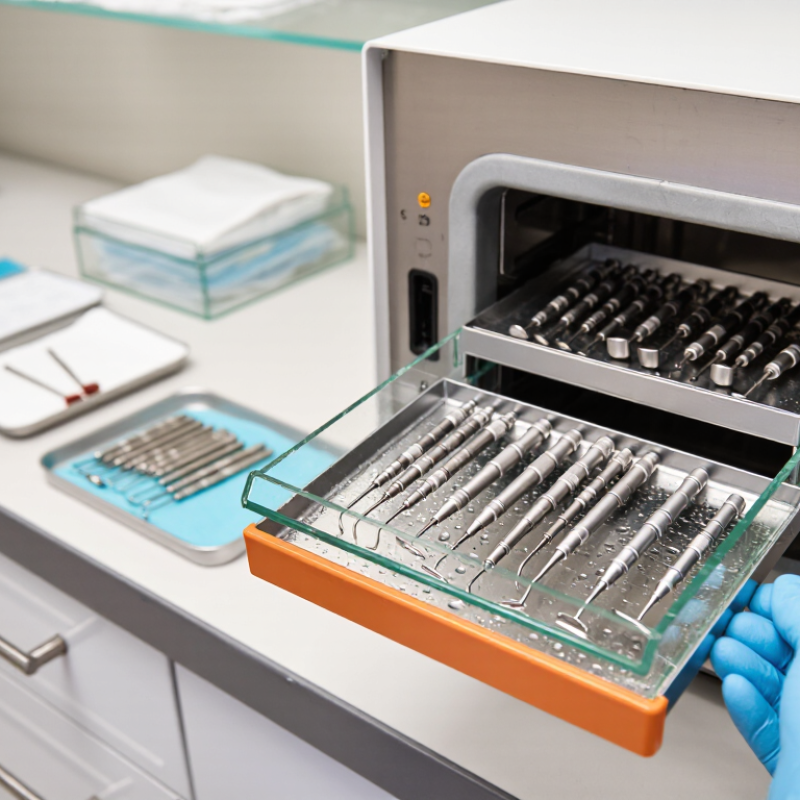
Dental instruments are arranged inside a perforated cassette or cassette tray before sterilization. |
Instruments must be opened, separated, and positioned according to the sterilizer and instrument manufacturers’ instructions. |
Improves organization and reduces direct handling of contaminated or freshly sterilized instruments. |
| Air Removal |
The sterilizer removes air, or uses gravity displacement, so steam can contact instrument surfaces and internal areas. |
Pre-vacuum cycles are designed to improve air removal from porous loads and hollow instruments; cycle availability depends on the equipment. |
Supports more consistent steam penetration when the cassette is correctly loaded. |
| Steam Exposure |
Saturated steam transfers heat to the instruments and denatures microorganisms’ proteins. |
Common validated steam exposure temperatures include 121°C or approximately 132–135°C. Exposure time varies by cycle, load, and device instructions. |
Provides a widely established method for sterilizing heat- and moisture-resistant dental instruments. |
| Pressure and Temperature Relationship |
Pressure is used to achieve the required saturated-steam temperature; pressure itself is not the primary sterilizing agent. |
Approximate saturated-steam reference points are 121°C at about 15 psi and 134°C at about 30 psi, subject to altitude and equipment design. |
Helps staff understand why cycle parameters must be monitored rather than relying on pressure alone. |
| Exposure Time |
The cassette remains in the chamber for the validated sterilization exposure phase after the required temperature is reached. |
Typical exposure references are about 15–30 minutes at 121°C or about 3–4 minutes at 132–135°C, but the equipment cycle and load instructions take priority. |
Allows clinics to select appropriate cycles for routine instruments and specific load types. |
| Drying |
After steam exposure, the chamber removes moisture through a drying phase before the cassette is released. |
Drying duration depends on the sterilizer, cassette configuration, load size, wrapping, and instrument materials. |
Dry instruments are easier to store safely and are less likely to experience moisture-related package contamination. |
| Aseptic Transfer |
The cassette can remain closed after sterilization, allowing instruments to be transported to the treatment area with limited handling. |
The cassette is not a substitute for sterilization packaging or proper sterile storage when instruments are not used immediately. |
Reduces the opportunity for accidental contact during movement from the sterilizer to the dental operatory. |
| Instrument Protection |
The cassette keeps instruments contained and can reduce contact with chamber surfaces, counters, and other items. |
Sharp, hinged, delicate, and hollow instruments still require correct preparation, opening, lubrication where applicable, and positioning. |
May help reduce damage, misplacement, and unnecessary reprocessing caused by poor instrument handling. |
| Cycle Monitoring |
Physical parameters, chemical indicators, and biological indicators are used to verify sterilization performance. |
Every load should be monitored according to local regulations and the sterilizer manufacturer’s instructions; biological monitoring commonly uses resistant bacterial spores. |
Creates documented evidence that the sterilization process was monitored and completed correctly. |
| Workflow Efficiency |
Instruments remain grouped by procedure or operatory instead of being handled individually after cleaning. |
Actual processing time depends on cycle selection, load size, drying requirements, and the number of cassettes available. |
Can support faster setup and more predictable instrument turnover without assuming that every cycle is shorter. |
| Compatibility |
The system is intended for instruments that tolerate the selected steam sterilization temperature, pressure, moisture, and drying conditions. |
Heat-sensitive or moisture-sensitive items require an alternative validated sterilization method. |
Helps prevent unsuitable items from being placed in a steam autoclave. |
| Quality Control |
Cleaning, inspection, cassette loading, sterilization, drying, storage, and recordkeeping form one controlled workflow. |
Sterilization cannot compensate for inadequate cleaning; visible soil must be removed before instruments enter the sterilizer. |
Promotes repeatable processing and supports infection-prevention requirements in dental settings. |