Top Lab Conductivity Meter for Global Buyers in 2026?
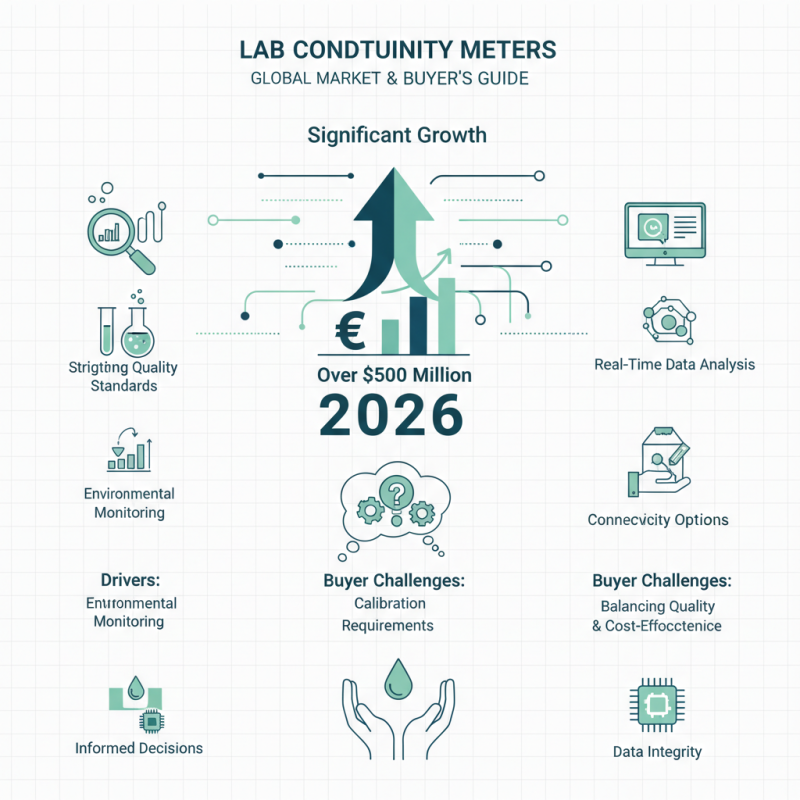
The global market for Lab Conductivity Meters is poised for significant growth by 2026. According to industry reports, the demand for accurate measurement tools in laboratories is increasing. This trend is driven by stringent quality standards in various sectors, including pharmaceuticals and environmental monitoring.
Research indicates that the Lab Conductivity Meter market is expected to reach a valuation of over $500 million by 2026. Buyers are focusing on advanced features such as real-time data analysis and connectivity options. However, many laboratories still struggle to select the right meter. They often overlook essential factors like calibration requirements and sensor types.
As more companies push for innovation, the need for reliable and easy-to-use Lab Conductivity Meters has never been more crucial. Understanding their features and functionalities will empower buyers. Making informed decisions can significantly impact laboratory efficiency and data integrity, but the availability of diverse options can lead to confusion. Balancing quality with cost-effectiveness remains a challenge for both new and established buyers in this market.
Top Features to Look for in a Conductivity Meter for Labs
When exploring the ideal conductivity meter for labs, several key features stand out. A good meter should offer a wide measurement range. This allows for versatility in various testing environments. Accuracy is crucial; therefore, precision is a primary consideration. Look for models that promise consistent results across multiple tests. Calibration options also matter. Regular calibration ensures that readings remain reliable over time.
Consider the user interface as well. A clear display and intuitive controls can make a significant difference in usability. Many users find complex menus frustrating. Thus, simplicity should not be overlooked. Portability might be beneficial too. Lightweight meters enable mobility, especially in fieldwork. However, check if the battery life meets your needs. Short battery life can interrupt critical experiments.
Connectivity features have gained importance. Bluetooth or USB connections allow for easy data transfer to computers or apps. This feature enhances data management, yet it can complicate the device’s use. Users should weigh whether these added functions are genuinely necessary. Ultimately, the best conductivity meter should balance advanced features with ease of use. The selection process can be daunting, but paying attention to these essential aspects can help guide informed decisions.
Top Lab Conductivity Meter for Global Buyers in 2026
| Feature |
Description |
Importance |
Expected Range |
| Measurement Range |
The range of conductivity that the meter can measure |
High |
0 - 200 mS/cm |
| Temperature Compensation |
Automatic adjustment of readings based on the temperature |
Medium |
20 - 25°C |
| Data Logging |
Ability to store measurements for later review |
High |
Up to 1000 readings |
| Display Type |
Specification of the type of display available |
Medium |
LCD Display |
| Battery Life |
Duration the device can operate on a single charge |
High |
Up to 50 hours |
| Warranty Period |
Duration of manufacturer’s warranty |
Medium |
2 Years |
Key Brands Dominating the Conductivity Meter Market in 2026
The conductivity meter market is experiencing substantial growth. As we approach 2026, several key brands are poised to dominate this space. Recent reports indicate that the global market is expected to reach approximately $1.2 billion by 2026. This growth is driven by advancements in technology and increasing applications across various sectors, including water quality testing, pharmaceuticals, and industrial applications.
Key players are focusing on innovation and product differentiation. They are investing in smart technology to enhance usability and accuracy. Reports show that portable conductivity meters are gaining traction due to their convenience and ease of use. This aligns with the growing focus on sustainability and environmental monitoring.
Tips: When choosing a conductivity meter, consider factors like accuracy, response time, and ease of calibration. User reviews can provide valuable insights into reliability and performance. Additionally, evaluate the warranty and customer support offered by manufacturers, as these reflect their commitment to quality. The right choice can significantly impact your work efficiency.
Comparative Analysis of Conductivity Meters: Accuracy and Reliability
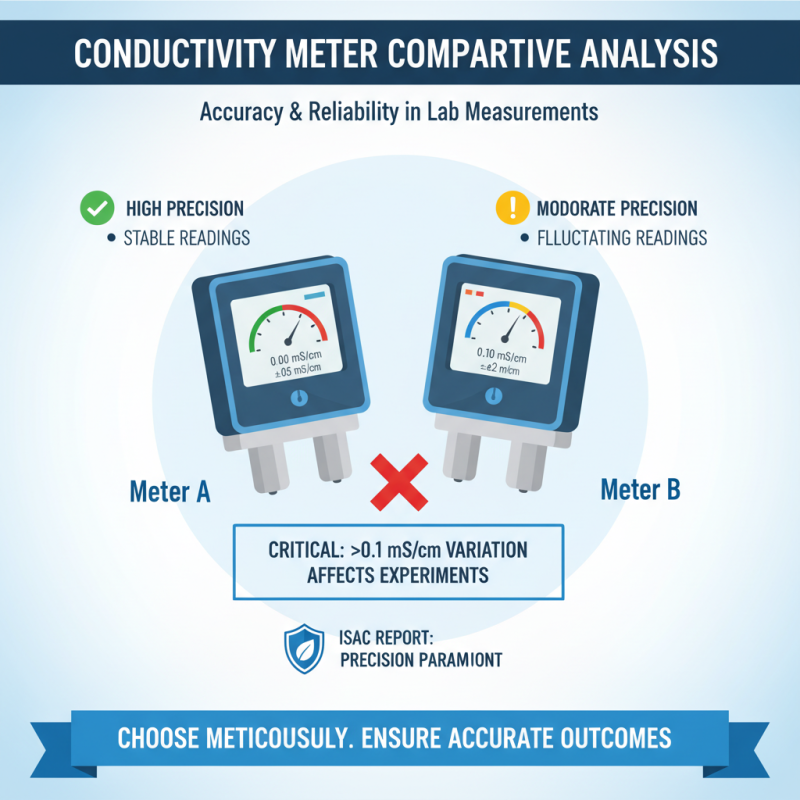
In the evolving landscape of laboratory measurements, the accuracy and reliability of conductivity meters are critical. A recent report by the International Society for Analytical Chemistry indicates that precision is paramount, with variations of even 0.1 mS/cm potentially affecting experimental outcomes. This highlights the need for meticulous selection of meters.
A comparative analysis reveals that not all conductivity meters are created equal. Many units demonstrate reliability under controlled conditions, yet may falter in real-world environments. Data from the Analytical Chemistry Journal shows that user error contributes to a significant percentage of measurement discrepancies. Calibration methods can vary widely, leading to inconsistencies.
Tips: Always calibrate your meter before use. Regular maintenance enhances performance and extends lifespan.
In terms of accuracy, many devices offer approximately ±2% of reading. This doesn’t account for temperature variations, which can dramatically influence conductivity readings. Understanding these limitations is crucial for researchers. It’s essential to consider not only the specification sheets but also feedback from the user community.
Tips: Engage with industry forums. Peer reviews can provide insights that specifications alone do not reveal.
Technological Advancements Influencing Conductivity Meters in 2026
In 2026, conductivity meters are set to undergo significant technological advancements. These changes will enhance their usability across various industries. With improved sensors, these devices will provide more accurate readings. Users can expect faster response times and greater reliability in harsh environments. New materials and designs will also contribute to the longevity of these instruments.
Moreover, software integrations will play a crucial role. With mobile applications, real-time data analysis will be more accessible. Users will have greater control over their measurements, allowing for instant adjustments. However, this increased complexity may present a learning curve for some users. Transitioning to advanced features could prove challenging.
The move towards smarter technology raises questions about user dependency. As meters become more automated, will professionals lose essential hands-on skills? Training programs will need to adapt to these innovations, ensuring that users remain competent. Conductivity meters are evolving, but maintaining a balance between tech and traditional skills will be vital. The future looks promising, yet reflective practices will be necessary as we embrace these advancements.
Market Trends Driving Demand for Conductivity Meters Globally
In recent years, the global demand for conductivity meters has surged significantly. A report by MarketsandMarkets indicates that the market is expected to reach $1.2 billion by 2026. This growth is primarily driven by the increasing need for accurate water quality testing. Industries such as pharmaceuticals and food processing require precise measurement of conductivity to ensure product quality and safety.
Environmental regulations also play a crucial role in this demand. With stricter laws on wastewater and effluent treatment, industries are turning to conductivity meters for compliance. The need for real-time monitoring enhances efficiency in wastewater management. Research by Grand View Research shows that the Asia-Pacific region will account for a significant share of this growth. This region is experiencing rapid industrialization, leading to a high requirement for reliable conductivity measurement.
Despite this promising outlook, the market faces challenges. Some users find the calibration processes cumbersome. A lack of trained personnel can lead to inaccurate readings, impacting operations. Continuous improvement in product reliability and user training is essential to mitigate these issues. As technology evolves, the integration of smart sensors may address these concerns, making devices easier to use.