How to Choose the Best Autoclave for Cassettes?
Choosing the best autoclave for cassettes is crucial in maintaining the highest standards of hygiene. Dr. Emily Carter, a specialist in sterilization technology, states, "The right autoclave can drastically reduce contamination risks." With numerous options available, it's essential to prioritize features that suit your specific needs.
Autoclaves for cassettes vary in size, capacity, and functionality. Some models offer rapid cycle times while others may provide energy-saving features. Understanding these differences can be overwhelming. Investing in an autoclave that aligns with your practice can enhance safety and efficiency.
Additionally, not all autoclaves are created equal. It’s important to consider user reviews and industry certifications. As Dr. Carter emphasizes, "Not every autoclave will meet your unique requirements." Reflecting on your practice’s demands will guide your selection process. The right choice will ensure you maintain compliance and provide quality care.
Understanding Autoclave Types for Cassettes: Key Differences
Choosing the right autoclave for cassettes involves understanding the different types available. The two primary types are gravity displacement and pre-vacuum autoclaves. Gravity displacement autoclaves rely on gravity to remove air. They are simple and cost-effective, making them popular in smaller labs. However, they may not penetrate dense loads effectively, leading to potential sterilization failures.
Pre-vacuum autoclaves, on the other hand, use a vacuum system to remove air before sterilization. According to a 2022 report from the American Society for Microbiology, these autoclaves provide superior sterilization for complex loads. They ensure steam penetration improves, which is essential for items wrapped in cassettes. Studies show that pre-vacuum models reduce cycle times by up to 20%.
While both types serve a purpose, there are considerations. The initial investment cost for a pre-vacuum autoclave is higher. Maintenance can also be more complex. Facilities must weigh the pros and cons of each type, focusing on their specific needs and budget. Not every option fits all situations.
Comparison of Autoclave Types for Cassettes
This chart compares the sterilization efficiency of different types of autoclaves used for cassettes. The data reflects the general performance of each type, providing insights for users to make informed choices.
Key Features to Look for in a Quality Autoclave for Cassettes
Choosing the best autoclave for cassettes involves assessing key features that ensure quality and reliability. Look for a device with a strong cycle validation. This ensures that sterilization conditions are met effectively. An autoclave should also have a clear display for settings and cycle information. A user-friendly interface simplifies operation for staff.
Consider the size and capacity of the autoclave. It should accommodate your typical workload while saving space in your facility. A compact model may seem appealing, but it can lead to bottlenecks if it cannot handle your cassettes efficiently.
Tips: Always check for a reliable vacuum system. This feature allows for thorough sterilization, even with challenging loads. Regular maintenance schedules can enhance reliability. Ensure the autoclave has good customer support and warranty options. This provides peace of mind for your investment.
Evaluating Sterilization Standards: Time, Temperature, and Pressure
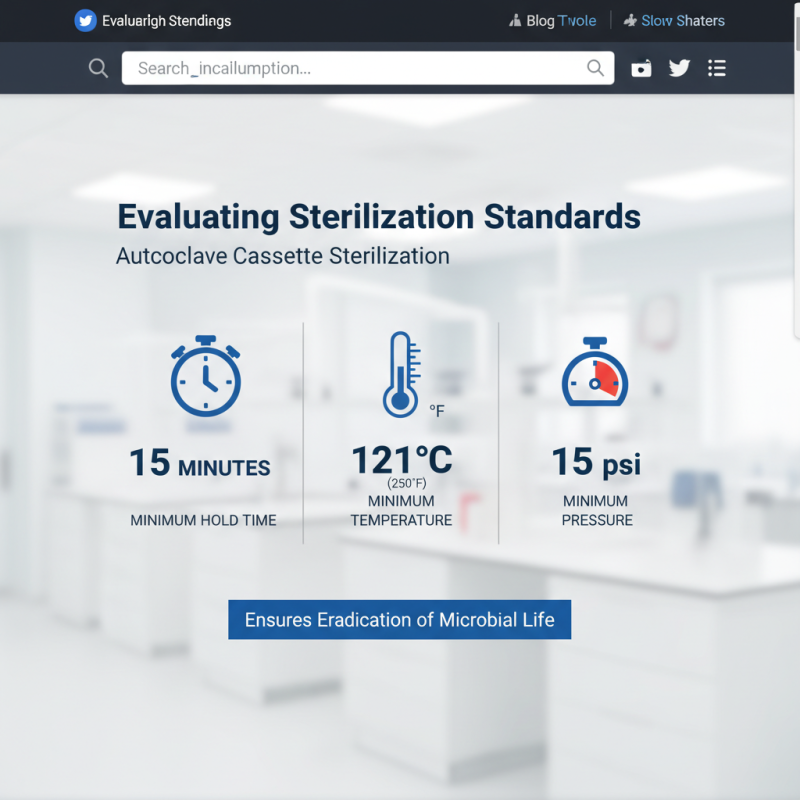
When selecting an autoclave for sterilizing cassettes, understanding sterilization standards is crucial. Time, temperature, and pressure are essential elements that determine the effectiveness of sterilization. Most guidelines recommend a minimum temperature of 121°C, maintained for at least 15 minutes at 15 psi. This generally ensures that all microbial life is eradicated.
However, many facilities overlook the importance of consistent monitoring. Inconsistent temperature and pressure can lead to ineffective sterilization. Proper calibration is essential. Routine checks can identify potential issues. Facilities should consider investing in monitoring devices that offer real-time data. This can encourage best practices among staff.
It’s also important to recognize potential gaps in sterilization processes. While time and temperature are paramount, the type of load affects outcomes. For instance, packaging materials can influence heat penetration. Many users assume all cassettes sterilize effectively, yet variations exist. Regular staff training can bridge these knowledge gaps, ultimately enhancing safety and compliance.
Assessing Capacity and Size Requirements for Autoclaves for Cassettes
When selecting an autoclave for cassettes, assessing the capacity and size requirements is crucial. Autoclaves come in various sizes, designed to accommodate different workloads and sterilization demands. According to recent industry reports, a typical autoclave can handle up to 50 cassette packs at once, ensuring efficiency for busy environments. However, facilities with limited space might need a compact model that still meets their sterilization needs.
Tip: Evaluate your daily workload. If you process a high volume of instruments, opt for a larger capacity autoclave. On the other hand, for smaller operations, a unit with lower capacity may suffice.
Size also influences sterilization cycles. A larger unit may take longer to heat up, impacting efficiency. Conversely, smaller models can expedite the process but may require more frequent loads. The key is finding a balance between your operational space and the number of cassettes you need to sterilize.
Tip: Always measure your available space accurately. Ensure there's room for ventilation and maintenance access around the autoclave. This prevents safety hazards and operational setbacks. Keep in mind, the ideal choice may also depend on future growth. Consider potential increases in workload that a more spacious unit could accommodate.
Cost Analysis: Balancing Budget with Autoclave Performance and Longevity
When selecting an autoclave for cassettes, cost analysis is vital. The initial price can be tempting. However, affordable options often sacrifice performance. A low-cost model may require frequent repairs. This can lead to higher long-term costs. It's essential to assess both upfront and future expenses.
Performance is equally crucial. An efficient autoclave offers faster cycles. This can enhance productivity in a busy environment. Consider energy efficiency too. Some models consume less power, lowering monthly bills. However, the best models may come at a higher price point.
Longevity is another significant factor. Investing more initially can ensure durability. Research suggests that higher-end models have a longer lifespan. Yet, not every expensive model guarantees performance. It's essential to read reviews and seek expert opinions. Balancing budget with reliability requires careful thought. Focus on finding an autoclave that meets your unique needs while ensuring efficiency and long-term value.