How to Choose the Best High Purity Water Purifier for Your Needs?
Choosing the right High Purity Water Purifier is crucial for various applications, including laboratories, pharmaceuticals, and electronics. According to a report by the Global Water Purification Market, the demand for high purity systems has surged by 15% annually. Purification standards vary greatly across industries.
In pharmaceuticals, for example, water quality requirements must adhere to stringent regulations. A single impurity can compromise drug efficacy. In the electronics field, ultra-pure water is vital for manufacturing high-performance semiconductors. However, not all purifiers are built to meet these specific standards.
Many consumers overlook important factors. Lack of understanding can lead to poor purchasing choices. Consideration must be given not only to the type of purification technology but also to the intended use. Reviewing multiple options can be overwhelming. It's essential to question the legitimacy of purity claims. Making an informed choice can ultimately influence the safety and success of your operations.
Understanding High Purity Water and Its Importance
High purity water is essential in various industries, including pharmaceuticals and electronics. It is free from contaminants and impurities. This purity ensures accurate results in lab experiments and reliable performance in manufacturing processes. Using high purity water reduces the risk of product contamination. However, many people overlook its importance.
Understanding high purity water begins with knowing its sources and treatment processes. Common sources may include reverse osmosis or distillation systems. Each method has its own advantages. Yet, not all systems deliver the same level of purity. It’s crucial to consider the filtration technology used. Some systems may not remove all types of contaminants. Regular maintenance is also vital. Neglecting this can lead to the growth of bacteria.
Choosing the right water purifier requires careful evaluation. What is your specific need? Are you using it for drinking or industrial purposes? Different applications may demand different purification levels. Look into the specifications carefully. High purity water might seem like an added expense. But the consequences of impurities can be far more costly. Take the time to research and reflect on your needs.
Comparison of High Purity Water Purification Methods
Key Features to Consider in a Water Purifier
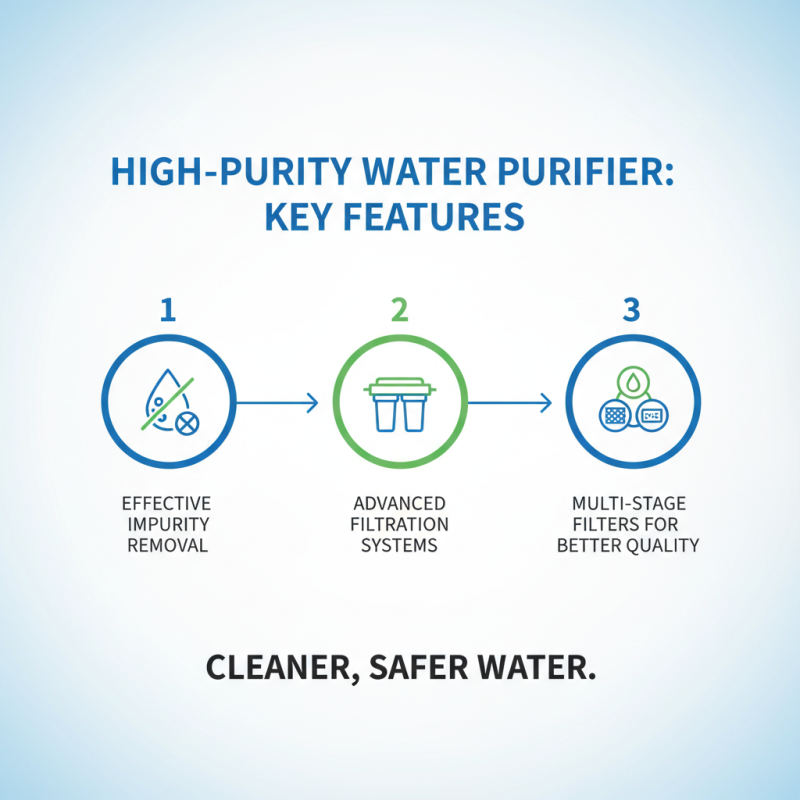
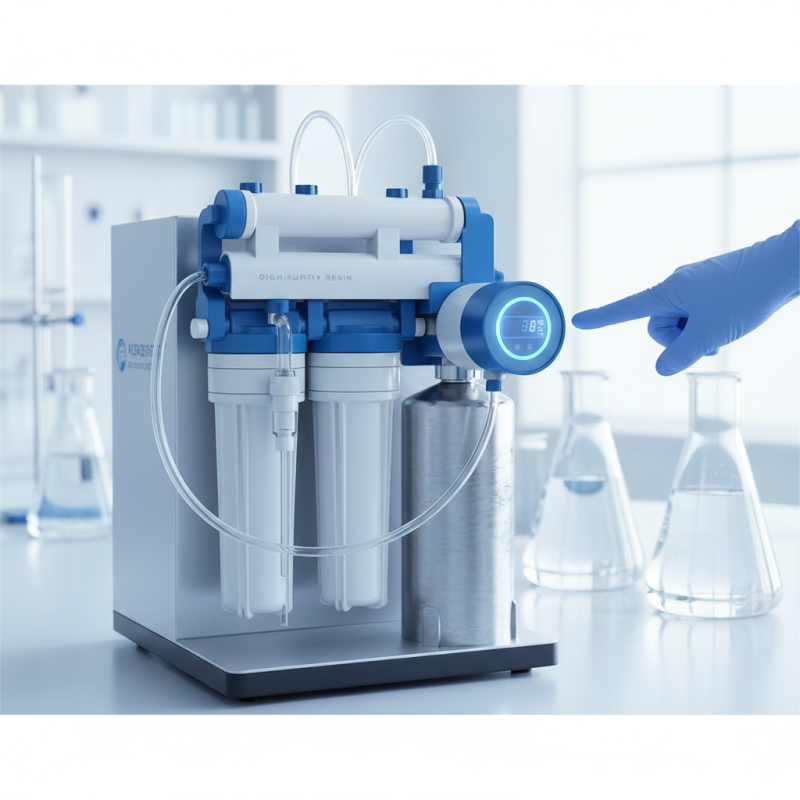
Choosing the right high purity water purifier involves understanding key features. A good water purifier should effectively remove impurities. Look for models with advanced filtration systems. Multi-stage filters can be very helpful. They typically combine different filtration methods. This means better overall water quality.
Consider the purification capacity. Some purifiers can handle large volumes, while others are more compact. Think about your daily water usage. If you have a large family, a higher capacity model is essential. On the other hand, a single person may need less.
Another important aspect is the maintenance. Regular filter changes are necessary for optimal performance. Check how easy it is to replace filters. Some models have indicator lights. This feature signals when it’s time for a change. Remember, maintaining the purifier can be a hassle if not designed well.
Tips: Regularly test your water source. Knowing its quality helps in choosing the right purifier. Also, consider your budget. Sometimes, cheaper models may not provide the purity you need. A lower price can seem appealing but may cost more in the long run. Think carefully.
Evaluating Different Types of High Purity Water Purifiers
When evaluating high purity water purifiers, it’s essential to consider the specific types available. Different technologies offer distinct advantages and drawbacks. Reverse osmosis systems are common. They can effectively remove various contaminants but may waste more water than other methods. This can be a concern for those mindful of water conservation.
Distillation is another method, boiling water to create steam, which leaves impurities behind. While distillation is effective, it can be slow and energy-intensive. Some users might find it inconvenient, especially in a busy household. Additionally, this method may not remove volatile organic compounds effectively.
Ultraviolet (UV) purifiers kill bacteria and viruses without chemicals. Yet, they may require regular bulb replacements. Maintenance can be overlooked, leading to inefficiencies. Each type has a learning curve. You need to assess your specific needs: water usage, space, and budget. Reflecting on these factors will guide you to the right choice.
How to Choose the Best High Purity Water Purifier for Your Needs? - Evaluating Different Types of High Purity Water Purifiers
| Purifier Type |
Purification Method |
Removal Rate (%) |
Cost (USD) |
Maintenance Frequency (Months) |
| Reverse Osmosis |
Membrane Filtration |
95-99% |
150 - 400 |
6-12 |
| Ultraviolet (UV) |
UV Light |
99.9% |
100 - 300 |
12 |
| Distillation |
Heat and Condensation |
99.9% |
200 - 500 |
24 |
| Carbon Filtration |
Activated Carbon |
80-90% |
50 - 200 |
6 |
| Nanofiltration |
Membrane Filtration |
90-95% |
200 - 350 |
12 |
Assessing the Purification Technologies Used
When choosing a high purity water purifier, the purification technology is crucial. Many systems utilize reverse osmosis (RO) membranes. These membranes can remove 95-99% of total dissolved solids (TDS), making them effective for a wide range of contaminants. According to industry reports, RO systems are preferred in laboratories due to their efficiency. However, they can waste a significant amount of water during the process.
Ultraviolet (UV) purification is another popular technology. It effectively kills bacteria and viruses in water without using chemicals. A study noted that UV systems can reduce pathogens by 99.99%. This makes UV an excellent choice for those concerned about microbial contaminants. Nonetheless, they do not remove chemical pollutants.
Another method is distillation, which heats water to create vapor and then condenses it back into liquid. While highly effective, distillation can be slow and uses more energy. Choosing the right method depends on individual needs. Some users may overlook specific filters that target unique pollutants. It's essential to assess the quality of your source water to ensure the selected technology meets your requirements.
Budget Considerations and Long-Term Maintenance Costs
When selecting a high purity water purifier, budget plays a crucial role. Initial costs can vary widely, depending on the unit. Some affordable options may seem appealing but can lead to higher long-term expenses. Regular filter replacements and maintenance will add to overall costs. You might want to calculate these expenses upfront.
Consider not just the price. Quality and durability matter. Some purifiers may require expensive repairs or frequent maintenance, which can strain finances. Neglecting this aspect might mean facing issues down the road. Be cautious of overly cheap models that may compromise performance.
Reflect on how often you’ll use the purifier. Daily use might justify spending more on a reliable unit. But if it's for occasional use, a simpler model could suffice. Assessing your personal needs is essential for a well-rounded decision. It's about balancing affordability and functionality without falling for flashy features that won't benefit you in the long run.