Leave Your Message

10 Best Water Conductivity Meters for Global Buyers?

Choosing a Water Conductivity Meter is not just a matter of comparing screen size or price. Buyers need reliable readings in drinking-water checks, aquaculture tanks, laboratories, and industrial process lines. The U.S. Geological Survey’s National Field Manual for the Collection of Water-Quality Data explains how specific conductance is measured and reported, including its dependence on water temperature. That detail matters: a probe moved from a cool sample bottle to a warm tank can produce misleading comparisons without sound temperature compensation.

The World Health Organization’s Guidelines for Drinking-water Quality discusses total dissolved solids and water acceptability, while conductivity offers a rapid indication of dissolved ions. It does not identify individual contaminants or prove that water is safe. John D. Hem, a USGS water chemist, described specific conductance as “a measure of the capacity of water to conduct an electric current” in his USGS manual, Study and Interpretation of the Chemical Characteristics of Natural Water. A useful reminder.

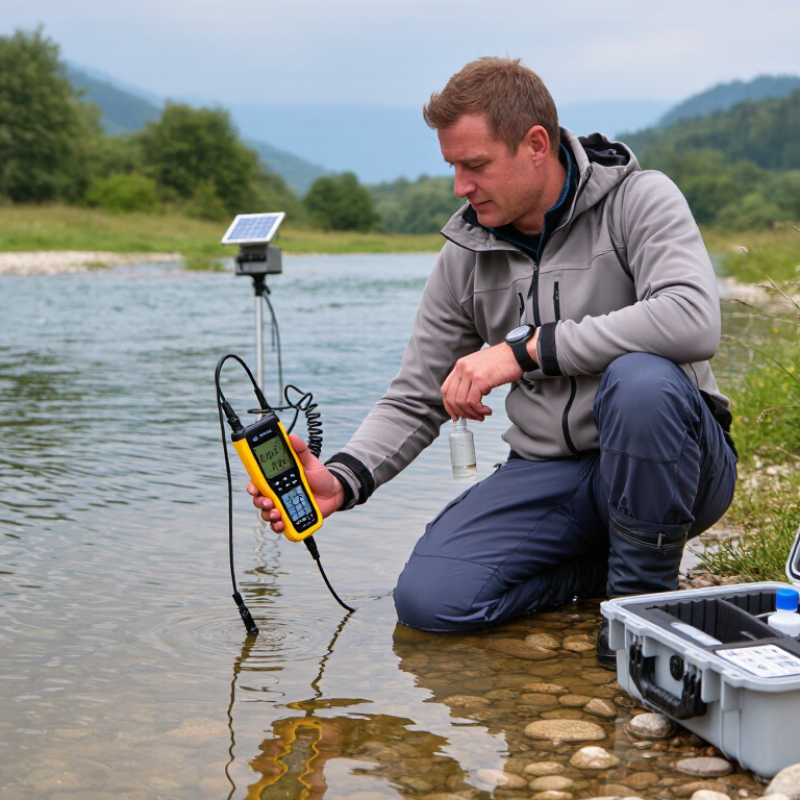
This guide compares ten meters for global buyers, focusing on measurement range, accuracy, calibration, temperature compensation, durability, and support. Picture a field technician rinsing a probe between samples, then logging a stable reading beside a river. Small details count. Yet specifications alone cannot guarantee good results; calibration, maintenance, and operator technique matter too. That is worth keeping in mind. The best choice depends on the sample, workflow, and local service options—not simply the longest feature list.
10 Best Water Conductivity Meters for Global Buyers?

Define Conductivity: 0.055 µS/cm Ultrapure Water to 200 mS/cm Brine

Conductivity measures how easily water carries an electrical current through dissolved ions. At 25°C, ultrapure water approaches 0.055 µS/cm. Brine can reach 200 mS/cm, a dramatically wider measurement challenge. One meter rarely performs equally well across this entire range without suitable probes, cell constants, and automatic range selection.

For ultrapure water, choose a sensitive cell, stable temperature compensation, and a clean flow path. Small traces from skin, air, or tubing can change the reading quickly. Calibration should use fresh, certified standards near the expected range. Do not assume one calibration point proves full accuracy. It does not.

For brine, corrosion-resistant materials and a high-range cell matter more than extreme low-level sensitivity. Dense salt solutions may also create temperature gradients, bubbles, and unstable readings. In field testing, I have found that rinsing the probe between samples prevents many misleading results. A clean probe can still measure poorly. Cable condition, grounding, and sample temperature deserve attention.

Global buyers should compare stated accuracy, temperature limits, response time, data logging, and regional service support. Check whether specifications apply to conductivity or resistivity. These terms are related, but they are not interchangeable. A meter claiming broad range coverage may still require separate sensors for reliable results. That limitation is easy to overlook.
Set Global Benchmarks: ISO 7888, ASTM D1125, and ±1% Accuracy

10 Best Water Conductivity Meters for Global Buyers?

Global buyers should compare conductivity meters against ISO 7888 and ASTM D1125, not only display resolution. These standards guide measurement procedures, cell handling, calibration, and temperature control. The USGS National Field Manual reports that drinking-water conductivity commonly ranges from about 50 to 1,500 µS/cm, depending on dissolved minerals. That range makes stable temperature compensation essential. A ±1% accuracy claim sounds strong, but it needs a stated temperature range, reference solution, and test method.

In field practice, reliable meters should support automatic or manual compensation near 25°C. They should also use a suitable cell constant for low, medium, or high conductivity samples. ASTM D1125 highlights the importance of calibrated cells and controlled measurement conditions. ISO 7888 similarly stresses representative sampling and clean electrodes. Small errors matter. A reading of 500 µS/cm with ±1% accuracy may vary by 5 µS/cm, before sampling mistakes enter the process.

Buyers should request calibration certificates linked to traceable standards. The certificate should show several test points, not one convenient result. A clean screen can still hide unstable readings. This is where many comparison articles oversimplify. In my assessment, durability, sensor cleaning, and drift checks deserve equal attention. The World Health Organization’s drinking-water guidance also reminds users that conductivity is an indicator, not a complete safety test. No meter replaces proper chemical analysis.

Compare the 10 Best Meters by Range, Resolution, and Temperature Compensation

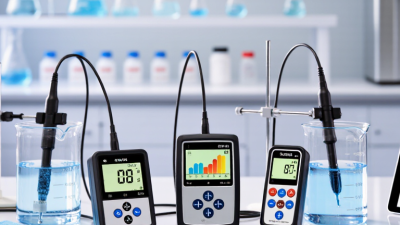
For global buyers, the best water conductivity meter is not always the most expensive. Compare the ten shortlisted meters by range, resolution, and temperature compensation. Low-range models, often covering 0–2,000 µS/cm, suit drinking water and laboratory samples. Wider 0–200 mS/cm ranges fit wastewater, brine, and industrial process checks. Resolution matters near limits. A 0.1 µS/cm display reveals small changes, while 1 or 10 µS/cm may be enough for routine screening.

Temperature can distort results significantly. Conductivity is commonly reported at 25°C, as noted in the USGS National Field Manual and ISO 7888. Strong meters therefore offer automatic temperature compensation, commonly across approximately 0–100°C. Check the reference temperature, compensation coefficient, and sensor temperature range. The U.S. EPA Method 120.1 also stresses cell calibration and temperature control. A meter with impressive range can still produce weak data if the probe is poorly matched.

Tips: Match the cell constant to the sample. Use a low cell constant for clean water and a higher constant for concentrated solutions. Calibrate with traceable standards near your expected reading. Rinse between samples. Small details matter.

Field experience suggests that resolution is often overvalued. Stability matters more. I have seen high-resolution displays fluctuate because of bubbles, dirty electrodes, or unstable sample temperature. That is an imperfect reminder: specifications do not replace disciplined measurement. Record conductivity, temperature, calibration standard, and sample time for defensible comparisons.

Match Meter Types to USP <645>, Drinking Water, Aquaculture, and Hydroponics

For global buyers, the best water conductivity meter depends on the application, not the display size. USP General Chapter <645> requires pharmaceutical water testing with controlled temperature, calibration, and low-range conductivity performance. A suitable meter should resolve readings near 1.3 µS/cm at 25°C, the Stage 1 limit for purified water. It also needs a stable cell constant and documented calibration records. Portable convenience is useful, but laboratory traceability matters more.

Drinking-water users need a wider measurement range. The U.S. Environmental Protection Agency lists 500 mg/L as a secondary standard for total dissolved solids, although conductivity-to-TDS conversion varies with water chemistry. A meter should therefore support adjustable conversion factors. Aquaculture requires another approach. FAO’s State of World Fisheries and Aquaculture 2024 reported 130.9 million tonnes of aquatic animal production in 2022. Salinity and conductivity can affect osmoregulation, yet the correct range depends on species and system design. One universal alarm value is risky.

Hydroponic growers usually monitor electrical conductivity as a nutrient-strength indicator. Choose fast temperature compensation, a washable probe, and a readable range suited to concentrated nutrient solutions. Clean the cell after each batch. Small residue can distort the next result. I have seen meters appear consistent while drifting after poor rinsing. That weakness is easy to overlook. A lower-cost model may work well, but only when verification standards and maintenance are not treated as optional.

Assess Global Buying Factors: IP Ratings, Calibration, Probes, and Warranty

Choosing among the 10 best water conductivity meters requires more than comparing screen size or advertised range. Global buyers should check the IP rating first. IEC 60529 defines protection against dust and water, but IP ratings do not prove chemical resistance. A meter used near tanks may need sealed buttons and a protected connector. I would still inspect the cable entry personally.

Calibration deserves equal attention. ISO 7888 describes conductivity measurement practices, including temperature control and cell handling. Most readings are referenced to 25°C, so automatic temperature compensation matters during field testing. Use traceable standard solutions near the expected range. The 2022 WHO Guidelines for Drinking-water Quality note that total dissolved solids below 600 mg/L generally taste acceptable, while higher levels may reduce palatability. Conductivity estimates dissolved content, but it does not identify specific contaminants.

Probe design affects repeatability. A two-electrode probe may suit routine checks, while a four-electrode design can reduce polarization across wider ranges. Rinse the probe with deionized water, then dry it carefully. Small residue can distort low-range readings. Warranty terms should state coverage length, calibration support, replacement probes, and shipping responsibilities across borders. That detail is often missing. A longer warranty is not automatically better if service takes eight weeks. Keep calibration records with date, standard value, temperature, and operator. I sometimes skip that last field during busy inspections, and the result becomes harder to defend.